February 23, 2026
What to Expect in the Dutch iGaming Market This Year
The Netherlands iGaming 2026 landscape is shaping up to be the most consequential since the market opened in October 2021. Several major developments are converging at once: the first round of five-year licenses is expiring, a higher gambling tax rate has taken effect, updated policy rules are now in force, and operators face stricter requirements around the separation of player funds.
For operators already active in the Dutch market, and for those considering entry, the window to prepare is narrowing. Understanding what has changed and what lies ahead is essential for staying compliant and competitive. This article breaks down the four developments that will define the Netherlands iGaming market in 2026.
License Renewals: The October 2026 Deadline
When the Kansspelautoriteit (KSA) first issued remote gambling licenses in September 2021, it awarded them for a fixed period of five years. That means the earliest licenses will expire on September 30, 2026. At the time of writing, the KSA has issued approximately 30 remote gambling licenses. Every operator holding one of these permits likely to navigate a renewal process under an entirely new set of rules.
The Dutch legislature deliberately chose a five-year term so the KSA could factor in its supervisory experience when evaluating follow-up applications. In practice, this means an operator’s track record over the past five years will carry significant weight. Operators that received fines or warnings must explain how they addressed those issues and what measures they have put in place to prevent recurrence. If the KSA finds the explanation insufficient, it may impose additional conditions, limit the time the extension is valid or deny the renewal.
What the Renewal Process Involves
Renewal applicants should not underestimate the preparation involved. While the KSA has indicated that the process for follow-up applications should be less burdensome than the original licensing round, the compliance bar and expectations have risen considerably since 2021.
The Exit Plan Requirement
One of the most notable additions to the 2026 licensing framework is the mandatory exit plan. Every operator applying for a license — whether new, extending or renewing — must now submit a detailed document explaining how it would wind down operations and withdraw from the Dutch market if its license is not renewed, is suspended or is revoked.
The exit plan must cover how the operator will handle legal and financial obligations during withdrawal, describe the organizational and technical steps to phase out the gambling offering, and set out communication measures for informing players, partners, and the regulator. Most critically, operators must demonstrate how they will handle customer payouts if they exit the market. The KSA has made it clear that protecting player funds during withdrawal is a non-negotiable requirement — a stance reinforced by several operator departures in recent years that created uncertainty for players.
In addition to the exit plan, all applicants must now submit a risk analysis under the Dutch Anti-Money Laundering and Anti-Terrorist Financing Act (Wet ter voorkoming van witwassen en financieren van terrorisme, or WWFT). The KSA has further clarified that operators who have not complied with enforceable court rulings at the time of application will be considered unreliable, which constitutes grounds for refusing a license.
Updated KSA Policy Rules: What Has Changed?
The Remote Gambling Policy Rules 2026
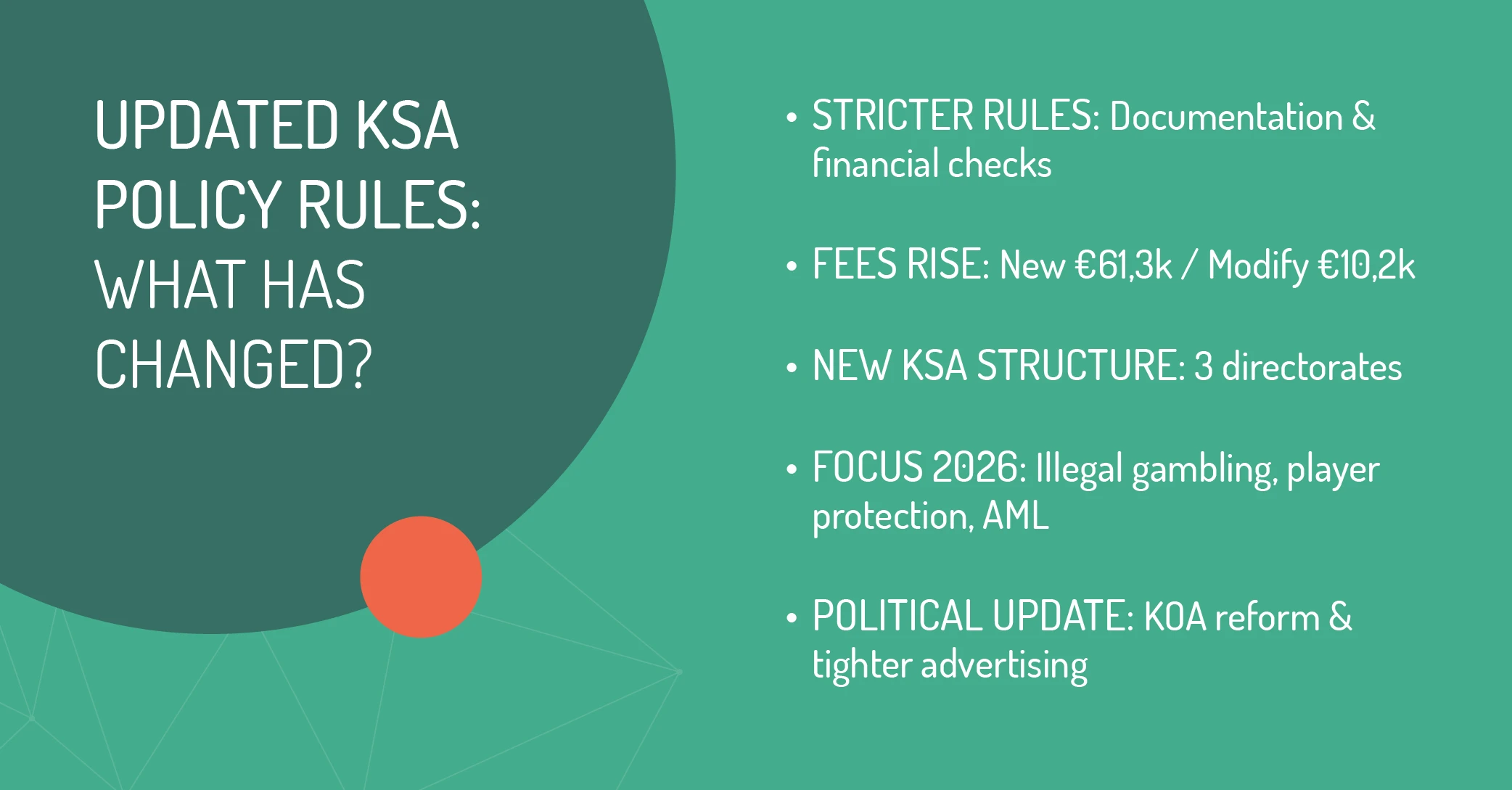
Effective January 1, 2026, the KSA introduced the Beleidsregels vergunningverlening kansspelen op afstand 2026 (Remote Gambling Policy Rules 2026). These updated rules govern how the authority assesses license applications and set out the compliance standards every operator must meet. Beyond the exit plan and AML (WWFT in Netherlands) requirements discussed above, the new framework introduces stricter documentation obligations, enhanced reliability clauses, and a more rigorous approach to evaluating an operator’s financial continuity.
License fees have also increased. From April 2026, the fee for a new remote gambling license rises from €48,000 to €61,300, while the fee for modifying an existing license increases from €8,000 to €10,200. These adjustments reflect the growing costs of running the KSA and maintaining effective market oversight.
New Governance and Enforcement Priorities
The KSA itself has undergone a structural transformation. As of January 1, 2026, the authority operates under a new governance model with three principal directorates: Player Protection and Management Advice, Permits and Supervision, and Digitalisation, Analysis and Operations. This reorganization is designed to address what the KSA describes as the increasing complexity of gambling oversight, driven by technological developments such as artificial intelligence and the growth of illegal gambling supply.
The KSA’s supervisory agenda for 2026 focuses on five key areas: combating illegal gambling, protecting vulnerable groups (particularly minors and young adults aged 18 to 24), monitoring the duty of care, enforcing advertising rules, and ensuring compliance with AML requirements. Operators should expect heightened scrutiny across all of these areas in the months ahead.
New Political Leadership
Following a snap election in late 2025, the Netherlands has formed a new coalition government led by D66, CDA, and VVD. Claudia Van Bruggen, Secretary for Legal Protection, has taken over responsibility for the ongoing overhaul of the Remote Gambling Act (KOA). It is expected that it maintains its commitment to repealing and replacing the KOA, with reforms focusing on tighter advertising restrictions and stronger player protection. While the full legislative overhaul is not expected to conclude in 2026, operators should monitor developments closely.
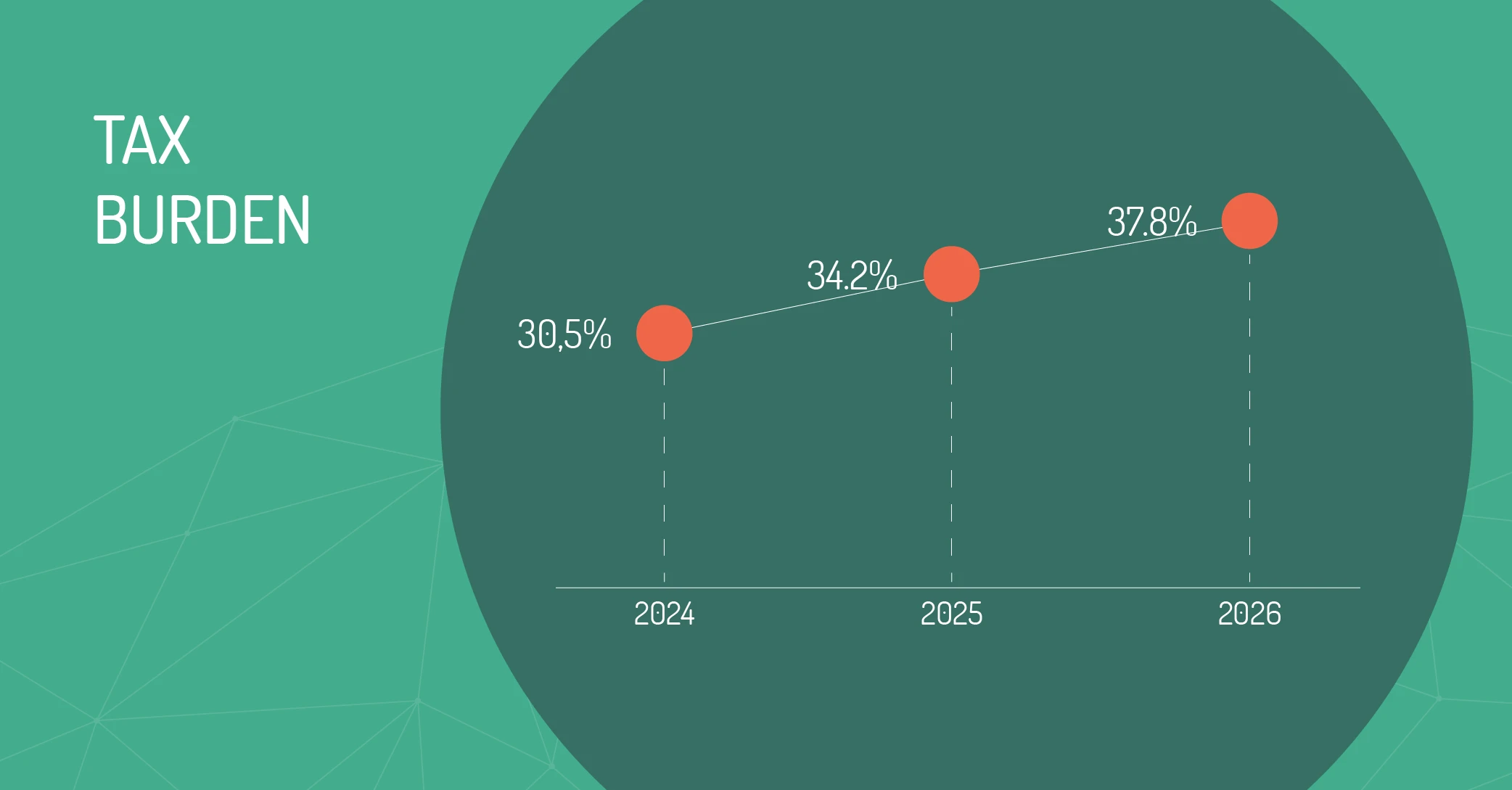
The Tax Burden: 37.8% and Its Consequences
From 30.5% to 37.8% in Two Years
The Dutch gambling tax rate has increased significantly in a short period. From a baseline of 30.5% of Gross Gaming Revenue (GGR) in 2024, it rose to 34.2% on January 1, 2025, and climbed again to 37.8% on January 1, 2026. Licensed operators also pay an additional gambling levy of 1.95%, bringing the effective tax and levy burden close to 40% of GGR.
How Is the Market Reacting?
The impact has been counter-productive. Rather than generating the additional €200 million in annual tax revenue the government anticipated, the 2025 increase resulted in a tax revenue shortfall. The KSA’s own research confirmed that estimated gambling tax revenue for 2025 ended up lower than in 2024, not higher. Stricter player protection rules and advertising restrictions compounded the effect of the tax increase, suppressing overall legal market activity.
The channelisation rate based on GGR — the share of gambling activity taking place with licensed operators rather than illegal ones — has fallen below 50% for the first time since the market opened. More money is now wagered with unlicensed operators than with licensed ones in the Netherlands. Several operators have already exited the Dutch market, citing the combination of rising taxes and tightening regulations as commercially unsustainable.
Why Player Funds Separation Remains a Key Challenge
What the KSA Requires
A fundamental obligation for every licensed operator in the Netherlands is the legal separation of player funds from the operator’s own risk-bearing capital. The KSA requires operators to demonstrate that player funds can be paid out at any time, including in the event of financial difficulties, bankruptcy, or liquidation. Under the Remote Gambling Policy Rules 2026, the accepted method for achieving this is through the use of a Dutch Third Party Funds Foundation.
When using a third-party funds foundation, operators must have a complete and signed agreement between the applicant and the foundation in place. This agreement must specify how player payouts are protected under all circumstances, including insolvency scenarios. The foundation must operate independently from the license holder, with its own management and supervisory board.
Practical Hurdles for Operators
The separation of player funds presents a practical challenge, particularly for operators that do not yet have a third-party funds foundation in place. Establishing one requires incorporating a foundation in the Netherlands, opening bank accounts, ensuring independent governance, and maintaining ongoing compliance from both a regulatory and audit perspective. Operators that currently rely on different arrangements will need to transition the third-party funds foundation setup to meet the KSA’s requirements ahead of the license renewal deadline.
Finding a bank willing to work with iGaming companies can also be difficult, which adds another layer of complexity to the process. Operators are encouraged to begin this process early, as delays in banking relationships or foundation setup can put the entire license renewal at risk.
What Should Operators Prepare for Right Now?
What Happens If My License Application Is Denied?
If the KSA denies a renewal application, the operator must execute the exit plan it submitted as part of the application. This means winding down operations, settling all player balances, and withdrawing from the market in an orderly manner.
Will the KOA Be Replaced This Year?
The Dutch parliament has committed to a full overhaul of the Remote Gambling Act, and the new coalition government is expected to continue this mandate. However, legislative reform of this scale takes considerable time. While 2026 will likely see further proposals and consultations, a complete replacement of the KOA is not expected this year.
Prepare Now, Not Later
The message for operators in the Netherlands iGaming 2026 environment is clear: proactive preparation will make the difference between a smooth renewal and a scramble.
Operators that begin the renewal process early, invest in understanding the updated policy rules, and ensure their player fund structures meet the KSA’s standards will be best positioned for the next licensing cycle.
Whether you are renewing an existing license or exploring entry into the Dutch market, the time to act is now. Our team in Amsterdam is ready to support you with compliance, corporate services, and player fund separation solutions tailored to the Dutch regulatory landscape.
Written by Kees-Jan Avis
Table of contents
SHARE THIS INFO
Game On: Unveiling the Latest Trends and Insights in the Online Gaming Industry
 Read more +19 March 2026 in Dutch Gambling License
Netherlands iGaming Exit Plan: What Licensed Operators Must Know
 Read more +18 May 2023 in Dutch Gambling License