

IGAMING LICENSE CHALLENGES
COMPANIES FACE:
SIMPLIFYING LICENSE ACQUISITION
AND SAFEGUARDING:
Obtain your iGaming or e-Gambling licenses hassle free in multiple countries.

01. submitting your igaming license application and
02. obtaining your igaming licenses
03. Once approved, we safeguard your license by assisting you with ongoing requirements


We have good relationships with, while remaining strictly independent of, all online gaming license authorities. This allows us always to be 100% dedicated to the purpose. We aim to provide our clients with an effortless process and turnkey solutions to facilitate the setup and maintenance of their iGaming or e-Gambling operations so that you can focus on what you do best, and we take care of the rest.
Need help determining which iGAMING
LICENSE SERVICES you need?
Contact us to discuss your specific needs.

The world of online gambling and gaming licenses is complex and dynamic, with continuously evolving regulations, technology, and player expectations. Entrepreneurs entering this space should carefully navigate these waters, taking advantage of the benefits of licensing and ensuring a commitment to responsible gambling practices. By partnering with knowledgeable corporate service providers, such as EM Group, and selecting the right jurisdiction, businesses can establish a strong foundation for success in the ever expanding online gaming industry. As the industry continues to flourish, it is imperative to stay informed about the latest developments and seize the opportunities that arise, ensuring long term viability and growth.
The concept of gambling has come a long way from its traditional roots. Once limited to luxurious casinos and local betting shops, gambling has embraced the digital age with open arms. The emergence of online gambling has transformed the landscape, allowing individuals to enjoy casino games and sports betting from the comfort of their homes. This evolution has been further accelerated by the global COVID-19 pandemic, which emphasized the importance of online entertainment. As a result, online gaming licenses have become essential for businesses aiming to establish a presence in this thriving sector.
- THE RISE OF ONLINE GAMBLING AND ITS IMPACT
- ONLINE GAMBLING REGULATION ACROSS THE GLOBE
- THE ADVANTAGES OF IGAMING LICENSING
- CHALLENGES AND CONSIDERATIONS IN OBTAINING ONLINE GAMING LICENSES
- CHOOSING THE RIGHT JURISDICTION FOR YOUR ONLINE GAMING BUSINESS
- ENSURING RESPONSIBLE GAMBLING AND COMPLIANCE
The online gambling industry has experienced explosive growth in recent years, attracting both seasoned gamblers and newcomers alike. Entrepreneurs with a knack for technology have capitalized on this trend, developing innovative platforms that offer a wide range of online casino games and betting options. From classic card games to cutting-edge slots and even live dealer games, the variety of choices has contributed to the industry's popularity.
This growth is not limited to just entertainment; it also presents significant economic opportunities. Online gambling is not just about playing games - it is a multifaceted industry that involves payment solutions, software development, marketing, and much more. Governments across the globe have recognized the potential of online gambling to generate revenue through taxation while also modernizing their regulatory frameworks to ensure player safety and fair play.
The regulatory landscape for online gambling has evolved over the years, adapting to the challenges posed by digital platforms. The concept of online gambling licenses was pioneered by Antigua and Barbuda in 1994. This groundbreaking step paved the way for other jurisdictions, including Curaçao, Isle of Man, Kahnawake, and Malta, to enter the scene.
These licenses, often called "multi-jurisdictional licenses" or ".com licenses," allow operators to offer services in regions lacking regulatory frameworks or where gambling is prohibited.
The benefits of obtaining such licenses are numerous. They grant operators access to a broader spectrum of online solutions, such as payment processors, software suppliers, and banking solutions. These licenses also serve as a seal of legitimacy, reassuring customers that the operator adheres to strict regulations and offers fair gaming practices. By obtaining the right licenses, operators can demonstrate their commitment to responsible gambling and build a solid reputation within the industry.
While the potential benefits are evident, acquiring online gaming licenses is challenging. The regulatory landscape is complex and varies from one jurisdiction to another. Navigating this intricate web of regulations can be daunting, often leading to delays or even rejections if not handled with care. Moreover, compliance requirements demand ongoing attention and resources, which can strain an operator's capabilities.
To address these challenges, partnering with experienced professionals becomes crucial. We offer comprehensive solutions that cover the entire license application process. We possess valuable insights into various licensing jurisdictions and maintain strong relationships with regulatory authorities, ensuring accurate submissions and increasing the chances of approval. By entrusting these experts, operators can focus on their core competencies while ensuring their gaming operations are set up for success.
Selecting the appropriate jurisdiction for your online gaming business is a decision that carries significant weight. Different jurisdictions have varying regulations, tax rates, and licensing fees, which can impact your business's bottom line. A crucial factor to consider is the reputation of the jurisdiction. Opting for jurisdictions with established and respected regulators can enhance your business's credibility and trustworthiness.
Another critical consideration is the local infrastructure and support available. A jurisdiction with robust banking facilities, reliable payment providers, and efficient administrative processes can streamline your operations. Additionally, some jurisdictions offer more favorable tax rates, which can substantially impact your profitability.
In recent years, Curaçao has become a preferred jurisdiction for obtaining online gaming licenses. It has a well structured licensing system, relatively low gaming tax, and a reputation for hosting many online gaming companies, making it an attractive choice for operators. By carefully assessing the options and aligning them with your business goals, you can make an informed decision that sets the stage for your online gaming venture's success.
Responsible gambling practices and regulation compliance take center stage as the online gambling industry grows. Regulatory bodies worldwide emphasize ensuring that operators provide a safe and fair gaming environment for their customers. This involves implementing measures to prevent problem gambling, protecting vulnerable individuals, and safeguarding against money laundering and fraud.
Online casinos and gaming establishments must incorporate features that promote responsible gambling. This can include setting deposit limits, offering self exclusion options, and providing access to resources for individuals seeking help for gambling related issues. By prioritizing these aspects, operators not only adhere to regulatory requirements but also contribute to the overall health and sustainability of the industry.
The world of online gambling and gaming licenses is dynamic and multifaceted, with numerous considerations and factors at play. From choosing the right licensing jurisdiction to ensuring fair play and responsible gambling practices, online gaming businesses must navigate a complex landscape to thrive in the industry. By understanding the importance of regulatory compliance, investing in quality online casino platforms, and prioritizing player trust and safety, operators can establish a strong foundation for their online gaming establishment. As the industry evolves, staying informed about the latest trends and regulations will be pivotal in seizing opportunities and mitigating risks for sustained success.

Online casinos have become the cornerstone of the modern gambling industry, offering players a vast array of games and betting options worldwide. An online casino's success relies heavily on its platform's quality, as it serves as the digital hub where players access their favorite games and experience the thrill of gambling. These platforms are more than just virtual spaces; they are carefully designed ecosystems that integrate game libraries, payment systems, customer support, and security features to create a seamless and enjoyable experience for players.
For online casinos to operate legally and ethically, they must adhere to the regulations set forth by licensing authorities. Different jurisdictions have established their regulatory frameworks to govern online gambling activities within their boundaries. Obtaining a gaming license from a respected jurisdiction not only grants online casinos the legal right to operate but also instills trust and confidence in players.
The Curaçao gaming license, for instance, has gained popularity due to its flexibility and reputation. Online gaming businesses operating under a Curaçao license can offer various gambling activities, including online casinos, sports betting, and more. While obtaining a Curaçao license involves a series of steps and compliance checks, its operational freedom and credibility advantages make it an appealing choice for many online gaming companies.

One of the key factors that online gaming businesses need to consider when pursuing a gaming license is the associated cost. Online gambling license costs can vary significantly depending on the jurisdiction, the type of gambling activities offered, and the scope of services. Some jurisdictions may require an annual license fee, while others impose additional charges for specific services.
Online gaming businesses must conduct thorough research and due diligence regarding licensing fees and other financial obligations. While the cost of acquiring a license is a significant investment, viewing it as a strategic decision that positions the business for long-term growth and success within a regulated and reputable environment is essential.
Fair gaming is a cornerstone of the online gambling industry. Players must be confident that their games are unbiased and that their chances of winning are not manipulated. To ensure fair play, online casinos utilize technologies such as random number generators (RNGs) that generate unpredictable outcomes for each game.
Regulatory authorities ensure that online casinos adhere to fair gaming practices. Before granting a gaming license, these authorities often require detailed information about the online casino's games, algorithms, and security measures. By enforcing strict compliance with fair gaming standards, licensing authorities maintain player trust and foster a healthy and vibrant online gambling ecosystem.
As the online gambling industry expands, so does the need for responsible gambling practices. Online casinos are responsible for protecting their players from the potential harms of excessive gambling and providing resources for those who may be struggling with problem gambling behaviors. Licensing authorities often require online casinos to implement deposit limits, self exclusion options, and links to support organizations.
Furthermore, operators must conduct thorough background checks on players to ensure they are of legal age and not on self-exclusion lists. This diligence helps prevent problem gambling and contributes to the online casino's compliance with regulatory requirements.

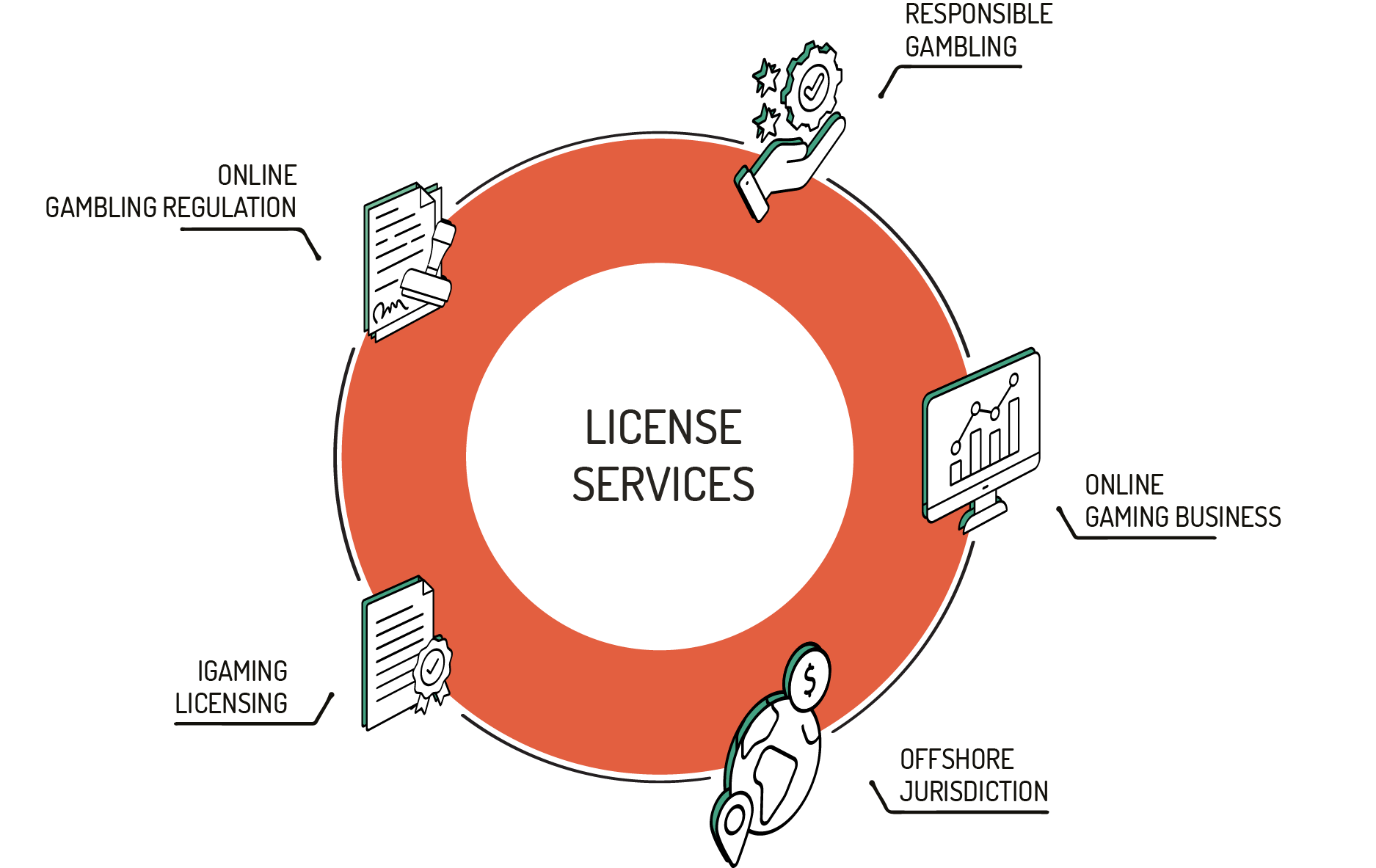
iGaming license services cover the full range of support an operator or supplier needs to obtain and maintain a license to offer online gaming legally. This includes assessing your business model, identifying the right jurisdiction, preparing and submitting your application, managing regulatory- communication and conditions, and ensuring your operation remains compliant once licensed.

An iGaming license is a formal authorization granted by a regulatory body that permits a business to offer online gaming services within a defined legal framework. Without one, operating in any regulated market carries serious legal and financial risk. Licenses are typically issued for either B2C (business-to-consumer) operations — where an operator offers games directly to players — or B2B (business-to-business) operations, where a supplier provides software or services to other licensed operators. Some jurisdictions also offer corporate license structures for groups of companies.
Domestic gaming licences—such as those in the UK, Netherlands, and Germany—require operators to comply with strict, market specific rules covering AML controls, responsible gaming measures, technical standards, and detailed reporting obligations, all tailored to the regulatory expectations of that individual jurisdiction. In contrast, international licences such as those offered in Malta and Curaçao provide a more flexible, cross border framework that supports multi market operations while maintaining defined compliance requirements that uphold international standards. Understanding whether your business is better served by a tightly regulated domestic licence or a more scalable international licensing model is essential to shaping an effective market entry strategy.
The jurisdiction you select determines your target markets and regulatory responsibilities, the payment infrastructure available to you, and the level of trust you project to players, partners, and regulators.
EM Group supports licensing across three leading jurisdictions. Below is a streamlined comparison to help guide your decision-making.
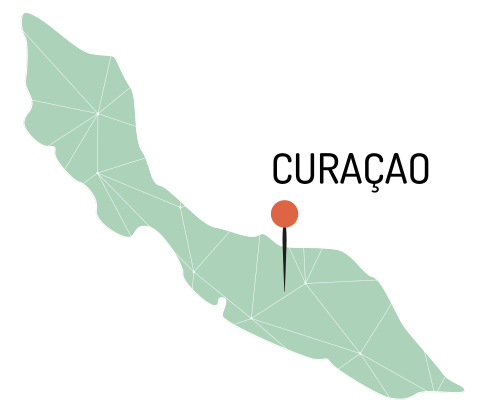
Curaçao has modernized its entire regulatory framework with the new National Ordinance on Games of Chance (LOK), replacing the old master‑license model with direct licensing under the Curaçao Gaming Authority and introducing stricter AML, responsible gaming, and financial transparency requirements. These reforms strengthen operator vetting, increase oversight tools, and require greater local substance, bringing Curaçao’s standards much closer to EU‑grade regulators such as Malta, where rigorous supervision and structured compliance frameworks have long been the benchmark. We have been active in Curaçao since 2005.
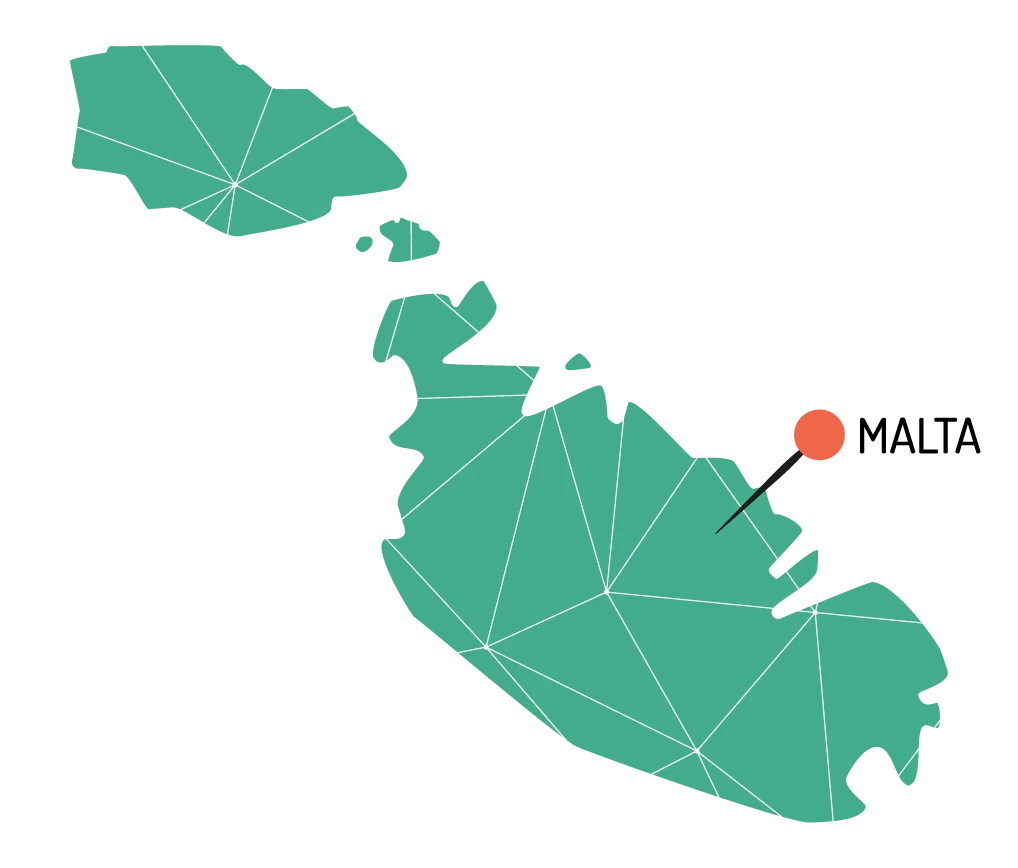
As an EU‑regulated jurisdiction with globally recognised standards, Malta provides B2C, B2B, and Corporate licences with a 10‑year validity period. An alternative licensing method offered in Malta is also the MGA Recognition Notice, for operators or providers who are licensed in other EU/EEA countries and want a recognition of their license by the MGA. Operators benefit from strong international credibility, EU payment access, and a mature regulatory environment and blooming gaming ecosystem. We have been active in Malta since 2014.
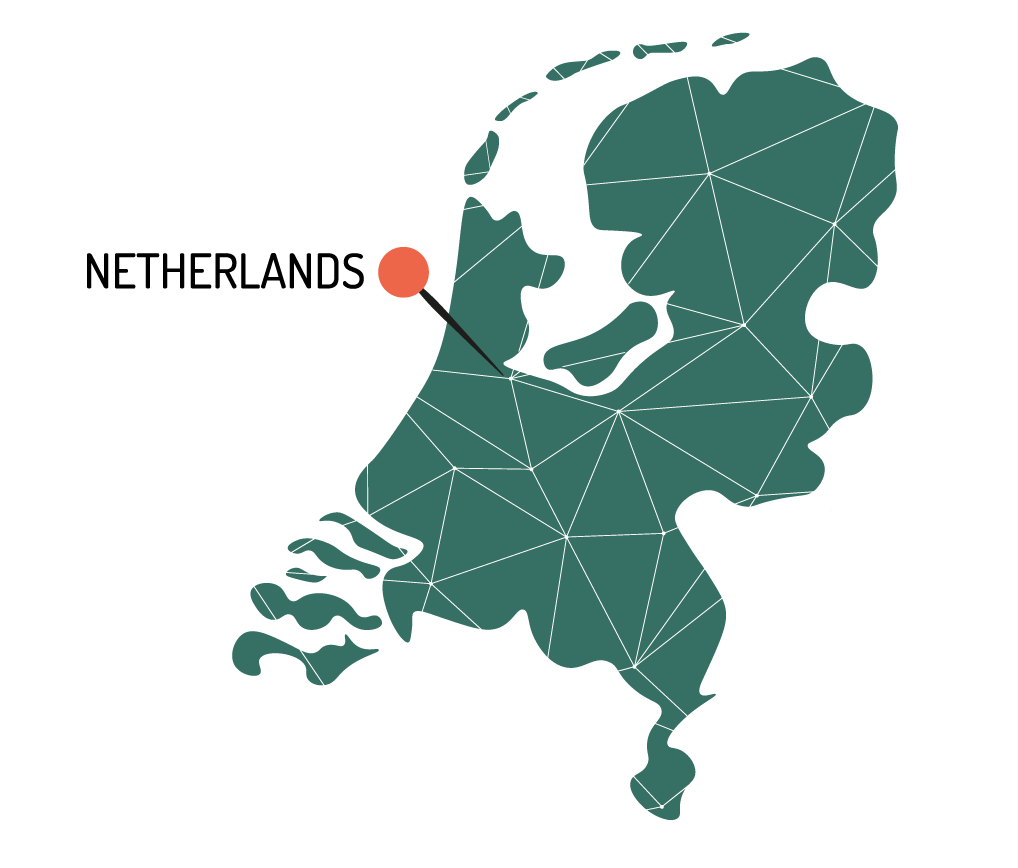
A highly regulated EU market focused on player protection, transparent operations, and strict compliance. The licensing process is thorough and places significant emphasis on responsible gaming, data integrity, and AML obligations.
To support these requirements, EM Group’s Player Safeguarding Foundation has become the most widely adopted solution for meeting local Dutch player‑protection obligations—helping operators streamline compliance while maintaining a strong regulatory posture.

We manage the full licensing journey on your behalf. Our process covers six key stages: pre-assessment, corporate structuring, documentation preparation, regulator communication, license approval, and post-license setup. Each stage is handled by our dedicated team, so you can focus on building your business while we navigate the regulatory process.
We start with a pre-assessment of your business model, ownership structure, and target markets to identify the most suitable jurisdiction and license type. From there, we advise on the appropriate (local) corporate structure, prepare and compile all required documentation — including business plans, various policies & procedures, and Ultimate Beneficial Owner (UBO) identification — and manage all communication with the regulatory authority throughout the review process. Once your license is approved, we support the post-license setup to ensure your operation launches compliantly.
Obtaining a license is the beginning, not the end. Every licensed operator must meet ongoing regulatory obligations to keep their license valid. We support clients through the full compliance lifecycle, covering AML monitoring, responsible gaming requirements, regulatory reporting, and license renewal support.
Our team stays in close contact with regulatory authorities across all the jurisdictions we operate in. This means we can respond quickly to regulatory changes, flag upcoming obligations before they become issues, and provide the expertise your team needs without the cost of building that capacity in-house. You pay one fee and get a dedicated team with deep cross-jurisdiction compliance knowledge.

We have been supporting iGaming operators through the licensing process since 2005. Our team has direct, hands-on experience with regulators across Curaçao, Malta and the Netherlands. We remain strictly independent of all regulatory authorities, which means our focus is always 100% on your interests.
We manage every stage — from your first inquiry through to long-term compliance support. Our multi-jurisdiction expertise means we can advise on the right licensing structure for your business model and growth plans. Your success is our success.
A B2C (business-to-consumer) license is for operators that offer online gaming services directly to players, such as online casinos or sportsbooks. A B2B (business-to-business) license is for suppliers that provide gaming software, platforms, or services to other licensed operators. Some jurisdictions allow a single license to cover both activities, while others require separate applications.
Timelines vary by jurisdiction and the complexity of your application. In general, obtaining a Curaçao license takes approximately six months, while securing an MGA license in Malta typically takes around 9-12 months. Our team minimizes delays by ensuring your application is complete and accurate and fully aligned with regulatory expectations from day one.
Not always- —but the answer depends on the jurisdiction, your target markets and whether you operate B2C or B2B. Under the new Curaçao (CGA) framework, a Curaçao B2C operator may not hold foreign licenses through the Curaçao company, whereas Curaçao B2B operators are permitted to hold foreign licenses. Malta, on the other hand, allows Maltese‑registered companies to hold foreign gambling licenses and also offers the MGA Recognition Notice, which enables operators to extend an existing domestic license into Malta without going through a full MGA application process. We help you design the optimal structure so your licensing footprint aligns efficiently with your target markets and operational model.
Understanding iGaming Licensing
Getting a gaming license requires understanding regulatory frameworks and ongoing compliance obligations. Our glossary covers the essentials:
- iGaming License
— License types (B2C, B2B) and what they authorize - Regulatory Compliance
— Requirements throughout the license lifecycle - Key Functions
— Governance roles required by regulators at every jurisdiction - Risk Management
— Managing compliance and operational risks in licensed operations - Compliance Solutions
— The framework you'll need to maintain your license - Separation of Player Funds
— Regulatory requirement for protecting player deposits
Browse the complete glossary to understand licensing requirements across Curaçao, Malta, the Netherlands, and other jurisdictions.